AGV vs AMR – What are the differences?
Which one to choose for your facility?
Investing in internal transport automation is one of the most critical technology decisions for any facility. At the market analysis stage, a common dilemma arises: should you choose a proven AGV or a more modern AMR robot?
Although both types of devices serve the same core purpose—replacing manual material handling—they differ significantly in navigation methods, flexibility, initial investment, and deployment complexity.
- Natural SLAM navigation vs fixed line/path guidance
- Facility infrastructure and flooring requirements
- Speed, repeatability, and obstacle adaptation
- Side-by-side feature comparison table: AGV vs AMR
- Hybrid solutions and engineering support from RB Poland
1. Navigation and Route Flexibility
The fundamental difference between these technologies lies in how the robots orient themselves in space and react to their environment.
- AGVs (Automated Guided Vehicles): Move exclusively along predefined, fixed paths (e.g., virtual lines, magnetic tapes, color lines, or QR codes). If an obstacle appears in an AGV’s path, the robot stops and waits for an operator to remove it.
- AMRs (Autonomous Mobile Robots): Utilize natural navigation (SLAM), LiDAR scanners, and cameras. When encountering an obstacle, an AMR analyzes the environment in real time and autonomously plans an alternative route, bypassing the obstacle without stopping the process.
2. Facility Infrastructure Modification
- AGV: Basic AGV versions requiring magnetic tape or RFID tags involve physical modification of the floor surface. Any subsequent layout changes to the production line require physically laying down new paths. Advanced AGVs can use Virtual Lines mapped out via LiDAR (just like AMRs); however, unlike AMRs, an AGV will not bypass obstacles along the route—it will stop and wait for them to be cleared.
- AMR: Requires no external infrastructure. The facility map is generated digitally during the initial setup run. Modifying routes or adding new pick/drop points is handled through the software in just a few moments.
3. Process Speed and Stability
Contrary to popular belief, newer technology does not always mean a better solution for every process:
- AGV Advantage: In rigid, highly predictable process flows (e.g., continuous assembly line feeding in the automotive industry), AGVs guarantee 100% repeatability and cycle-time predictability for every run.
- AMR Advantage: In dynamic warehouses where pallet positions change frequently and aisles experience heavy pedestrian and vehicle traffic, AMRs ensure operational continuity through real-time adaptability.
Comparative Breakdown: AGV or AMR?
| Feature / Criterion | AGV Vehicles | AMR Robots |
|---|---|---|
| Navigation Method | Strictly predefined path | Autonomous path planning |
| Obstacle Response | Stops and waits for obstacle removal | Dynamic obstacle avoidance |
| Route Modification | Requires infrastructure or map changes | Fast software reconfiguration |
| Initial Deployment | Very simple and fast | Requires digital mapping of the facility |
| Operating Environment | Dedicated, repeatable routes | Dynamic, changing spaces |
Hybrid Solutions from RB Poland
In industrial practice, the line between AGV and AMR is increasingly blurring. At RB Poland, we design mobile platforms that combine the advantages of both worlds. For example, mobile robots can navigate along fixed trunk lines (like an AGV) and switch to full autonomy in loading areas (like an AMR).
Which Option to Choose for Your Facility?
Choose AGVs if:
- You have fixed, rarely changing transport routes from point A to point B.
- You are looking for a simple, reliable, and cost-effective entry solution.
- Your process requires maximum cycle-time predictability and operation in segregated zones.
Choose AMRs if:
- Your facility frequently modifies production line layouts or rack configurations.
- Temporary obstacles frequently appear in aisles (e.g., staged pallets, pedestrian traffic).
- You plan to build a flexible, multi-vehicle fleet managed by a central fleet manager.
Not sure which solution is best for your facility?
You don’t have to make the decision on your own. The RB Poland engineering team will analyze your production processes, route layouts, and load requirements to select the technology that is perfectly suited to your needs.
Check out the articles below or explore the full AGV & AMR GUIDE (FAQ)
Learn the fundamentals of internal transport automation. Discover how mobile robots are replacing traditional transport methods and improving intralogistics in manufacturing facilities.
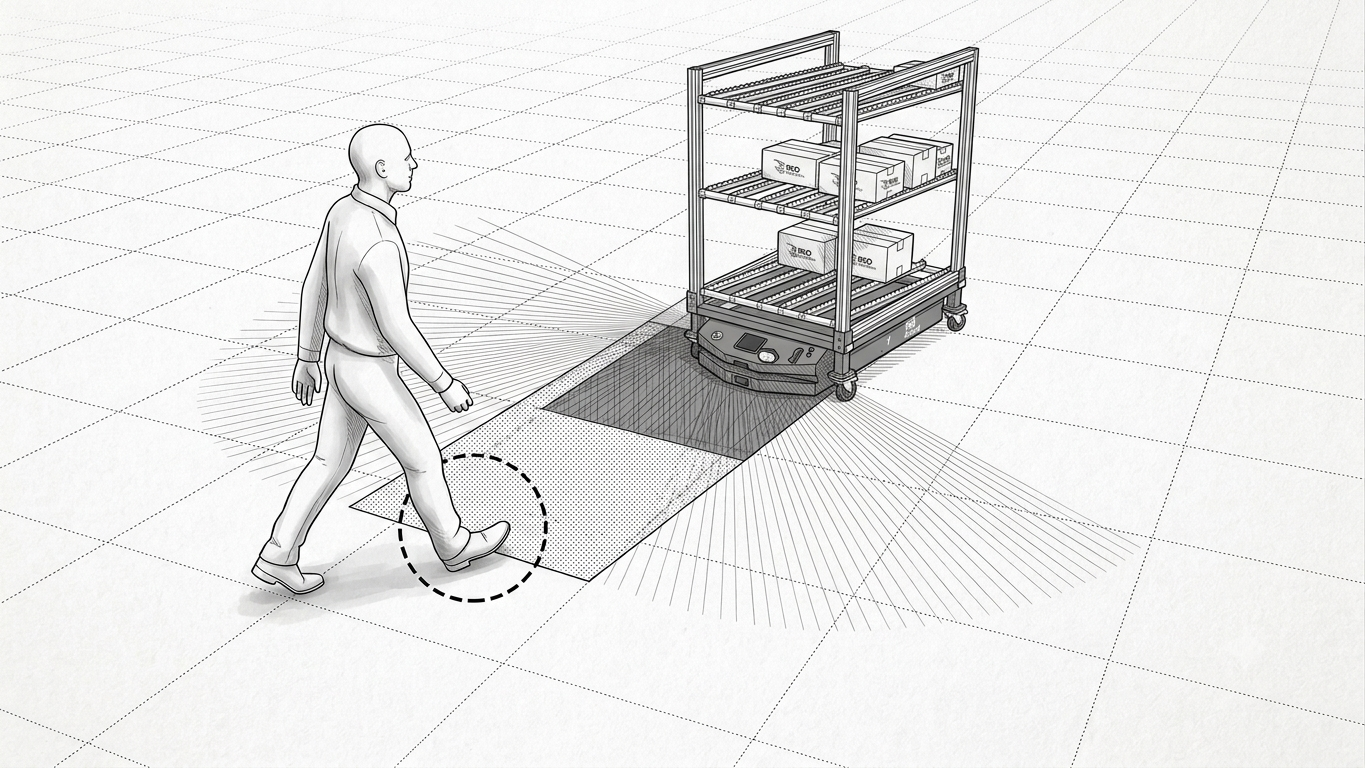
Discover how safety scanners, 3D safety cameras, and other protective systems make industrial facilities safer.
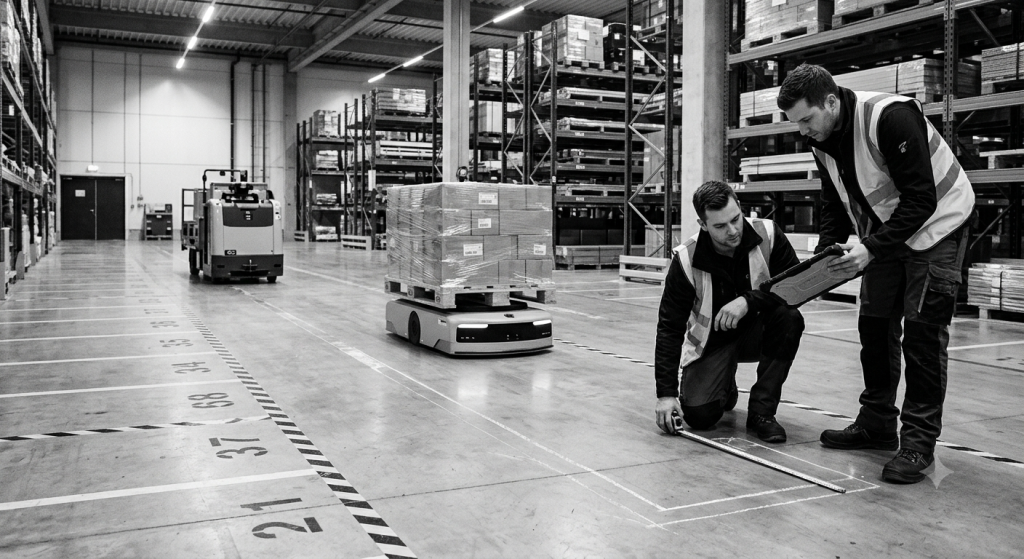
See how little is needed to introduce a fleet of AGVs or AMRs into your factory.